When the World Cries Together: How Pop Culture Got Us Talking About Grief
By: Megan Hogan
Oldest sister: “Dolly Parton Died (three crying emojis)”
Youngest sister: “Woah what really?!”
Me: “NO. NO. NO. I Rebuke.” (in four separate very rapid, dramatic messages)
Naturally, I then pulled up Instagram and confirmed the news. Scrolling through social media this week has felt heavy, even for a person who works for a grief support non-profit. The passing of icons has completely flooded timelines and stories with quotes, classic clips, sorrow, and joy. As we say goodbye to Tim Curry, Peter Cullen, and the queen, Dolly Parton, I felt compelled to write a little something, in hopes that it resonates with you, or that I can provide a different (somewhat grief-y) perspective.
When mega-stars of this scale pass, it triggers a very specific, collective intake of breath (and maybe a couple of choice words, asking the world WHY?!). But if you look past the initial shock, what unfolded across the internet and news outlets this week wasn’t just sorrow…it was a masterclass in healthy, open, beautifully shared grief.
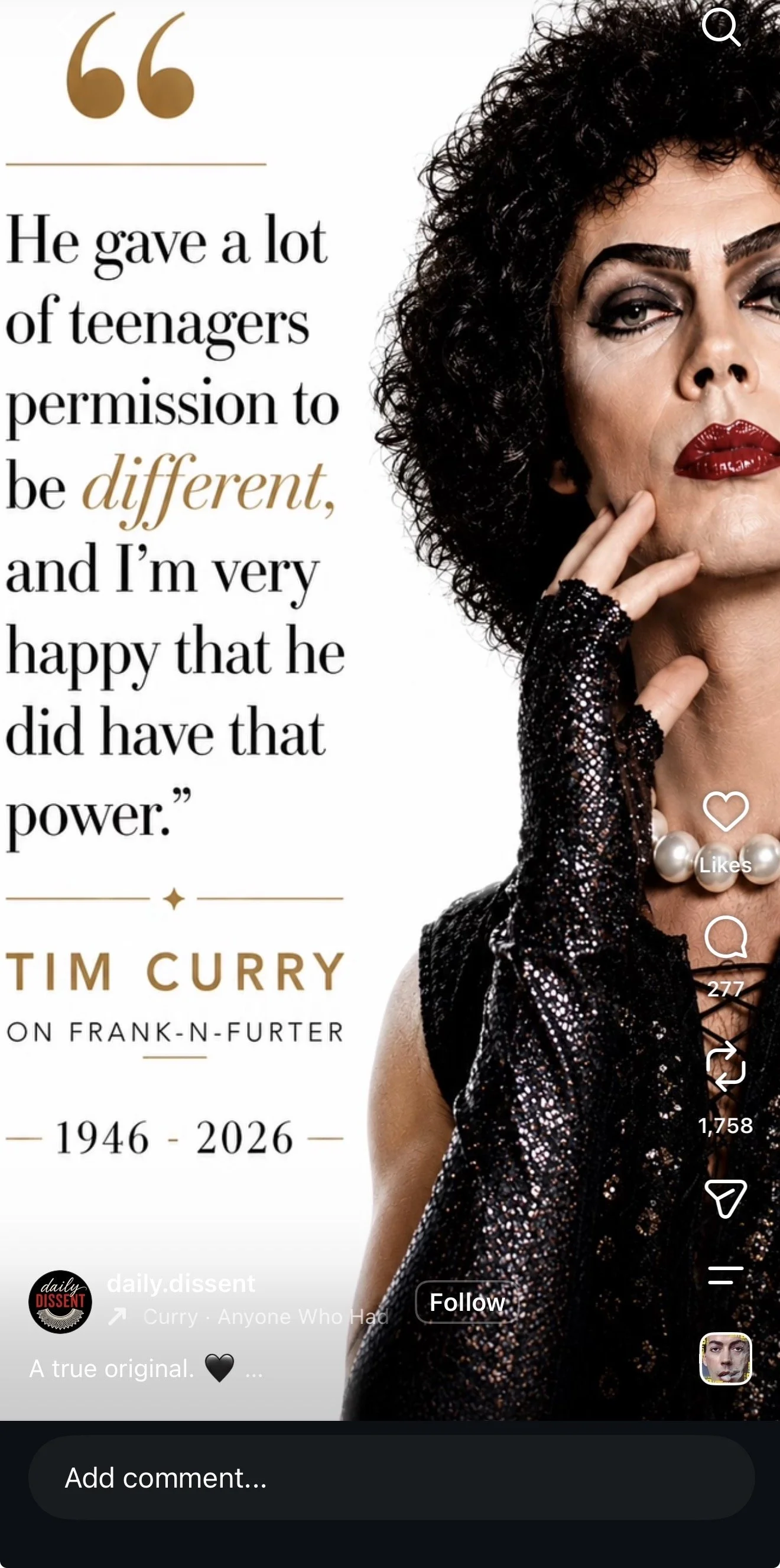
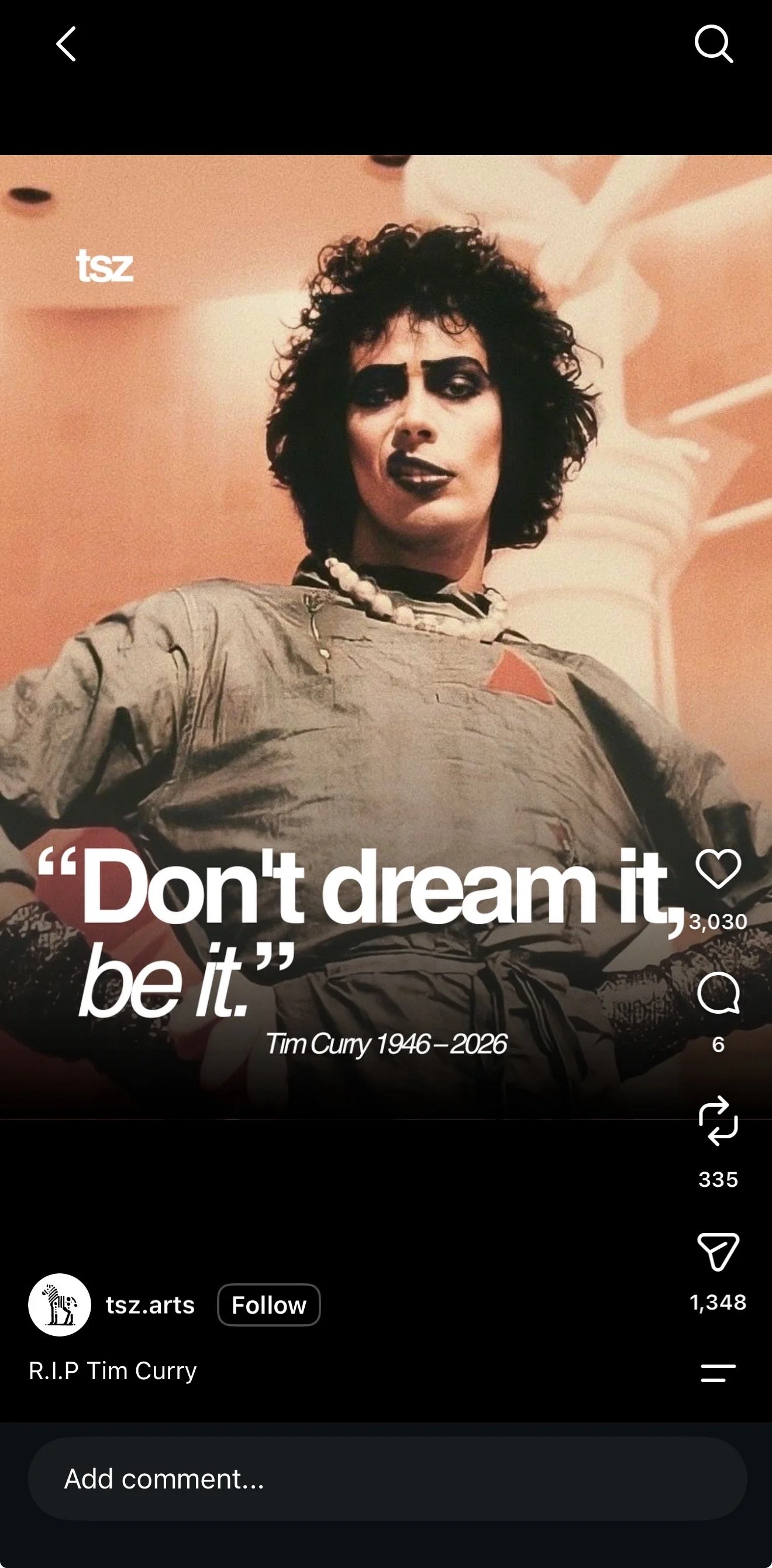
Working at HeartLight for the past 5 years, it has become blatantly obvious to me that there is a misconception in our society that grief has to be quiet, somber, and kept to ourselves. This week in pop culture reminded us that grief is allowed to wear 3 ft. blonde wigs and sequined gloves or dress in drag to quote The Rocky Horror Picture Show.
I took a step back this week and saw these reactions:
Storytelling and inspiration: WhenDolly passed, they didn’t just talk about the music. Mothers, daughters, and friends shared memories about how Dolly’s motherly love, charity work, allyship, and witty humor inspired a generation to be kind to everyone (including yourself). A community of theater kids and movie buffs sharing their favorite roles Curry had and how they impacted their lives. Whether he scared them, made them laugh, or made them sing, they shared how much he will be missed.
Grief in action: People did not just sit quietly with this grief. 90% of the stories I clicked through this week included a picture, quote, or video of one we had lost. The get togethers have already been planned: Transformers movie marathons, Rocky Horror Picture Show casting calls, and Dolly Parton glitter dance parties. Many are even donating to causes these celebs were outspoken about, which is a truly meaningful way to pay it forward in their memory.
When we watch the world publicly mourn celebrities, something subtle and important happens, grief gets normalized. Suddenly everyone is talking about how the loss affected them – how it made them FEEL. At HeartLight, we get to witness this every day, but we know in the outside world, it’s not that common. When collective loss hits the media:
It demonstrates healthy rituals: Memorials and rituals give us a way to honor the lives and legacies of the person we lost. These rituals allow us to connect with others and offer a space where people can mourn, reflect, and find comfort. It reminds us we aren’t alone in feeling deeply.
It reminds us that we aren’t alone: Seeing millions of strangers share the exact same emotion creates a powerful sense of community. Grief can be extremely isolating in most cases, but when we come together and talk about the ones we have lost, you feel immediately understood.
Gives us permission to feel: Angry, sad, nostalgic, anxious. When millions of people share their emotions publicly, it might give us a bit of confidence to acknowledge our own feelings.
Breaks the silence: Public mourning pushes grief out of the dark and into everyday conversation, showing there's no "wrong" way to grieve. Every time we talk about grief publicly, we lay a small stone on the path that leads to the normalization of death and grief. And when we share our grief with others, it doesn’t go away, but it can feel a little lighter.
So, whether you spent the week watching Frank-N-Furter say, “Come up to the lab, and see what’s on the slab”, humming Jolene, or practicing your best “Autobots, Roll out!” give yourself some time to feel it. Keep sharing stories, keep sharing laughter, and remember that honoring our grief and acknowledging what we have lost, is one of the healthiest things we can do, together.